
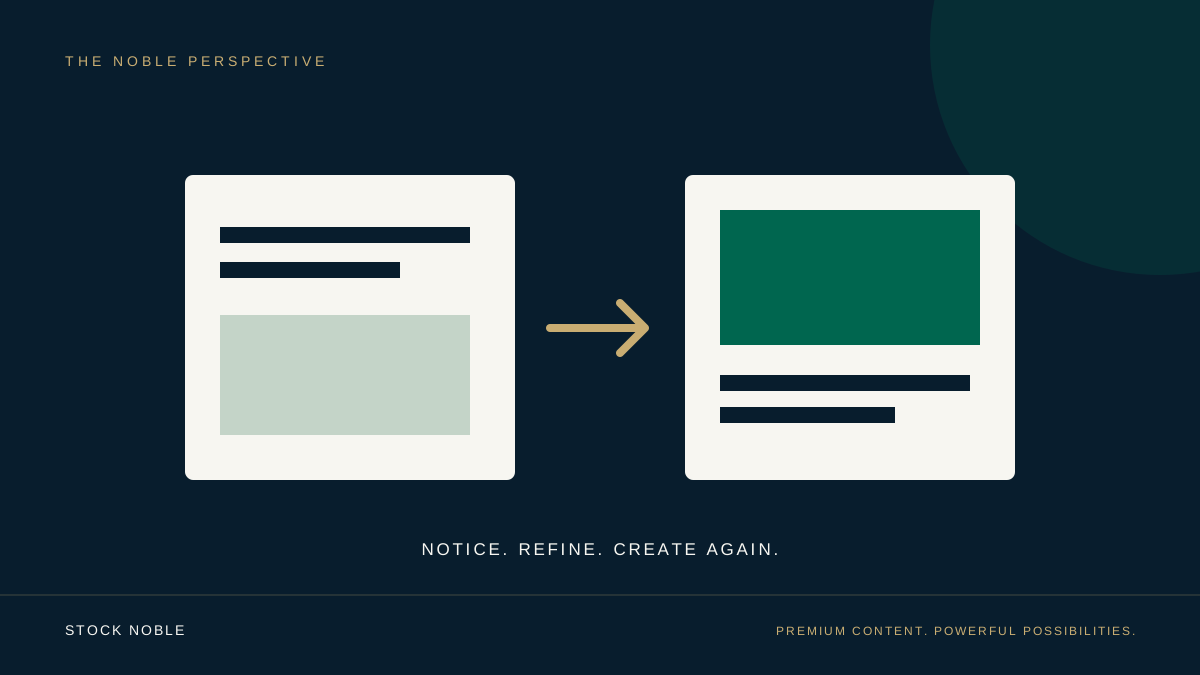
Your first finished post is more than an image ready to upload. It is a record of decisions.
You chose an audience, settled on a message, found a visual direction, arranged the information, and exported a file. Some of those choices were deliberate. Others probably happened because something looked right at the time.
A short review helps you separate the decisions worth keeping from the ones worth revisiting.
Start with the original job
Put the finished post beside the sentence that described its purpose.
For the workshop example, that might be: "Help a beginner understand that they can make a first art print and find the workshop details."
Look at the actual design. Does it communicate that idea, or has the decoration gradually taken over?
The question is specific enough to answer. "Is it good?" usually invites a collection of preferences.
Ask before explaining
Show the post to someone reasonably similar to the intended reader. Do not begin by describing everything it is supposed to communicate.
Ask:
What do you think this is about?
Who does it seem to be for?
What would you expect to do next?
Listen for the order of their answers. If they mention the decorative badge and miss the workshop, your focal point may need another look.
If they understand the offer but cannot find the next step, investigate that part of the layout or the destination.
One person's response is useful qualitative feedback. It is not proof that a campaign will succeed or that every member of the audience will react the same way.
Keep a decision log
Write down three things:
- One choice that helped.
- One point that caused uncertainty.
- One change to try next.
For example, the image may establish the right mood while the supporting line becomes difficult to read at a smaller size. Your next test can focus on the text rather than replacing everything.
Save the earlier version. A comparison is easier to understand when the original has not disappeared beneath your revisions.
Separate design feedback from campaign results
If the post is published, compare the response with its actual goal.
A helpful tip might encourage saves or useful replies. An invitation might lead people to the information page. A sales post needs a closer look at completed purchases, not just approval of the image.
A small number of views or clicks leaves many questions unanswered. Traffic source, audience fit, timing, the offer, and the destination can all affect the result.
Treat the early evidence as a reason to investigate. It is not a verdict on your ability or a reason to promise a specific improvement.
Choose the next small project
Adapt the message into a second format, such as a flyer or channel header.
Keep the useful visual choices, then reconsider the layout for the new space. Notice which decisions transfer and which need adjustment.
That is how a single finished post can become the beginning of a more consistent body of work.